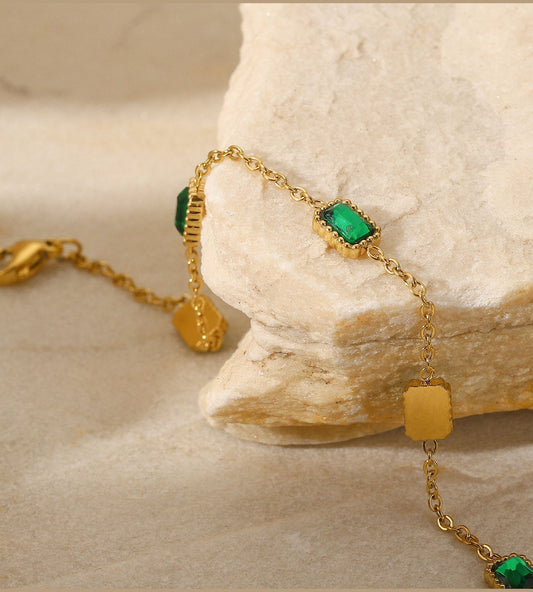
How Long Does Gold-Plated Jewellery Last? What Your Base Metal Is Really Telling You
By Ankita Singh 7 min readShare
We get this question a lot.
"I bought gold-plated jewellery before and it turned green in two weeks. Will yours do the same?"
It's a fair question and an important one. The truth is, gold-plated jewellery has a bit of a reputation problem. Not because gold plating itself is bad, but because a lot of people don't realise that the gold layer is only half the story.
The other half? What's underneath it.
First, Let's Talk About How Gold Plating Actually Works
Gold plating is the process of depositing a thin layer of real gold onto a base metal through electroplating. The gold you see—that warm, rich finish—is genuine. But its job is essentially cosmetic. It sits on top of the base metal, and over time, through friction, moisture, and daily wear, it gradually thins.
What happens after it thins depends entirely on what's underneath.
This is why two pieces of "18K gold-plated jewelry" can behave completely differently. Same gold. Different base. Very different story.
The Three Base Metals You'll Most Commonly Find
Brass
Brass is everywhere in affordable jewellery and that's not a criticism. It's inexpensive, easy to shape, and takes gold plating well in the short term. A lot of fashion jewellery brands use it, and there's nothing wrong with that for what it is.
The challenge with brass shows up over time. Brass is a copper-zinc alloy, and it reacts to sweat, humidity, skin oils, water. As the gold layer thins, that reaction starts to show. You get tarnishing, sometimes discolouration on the skin, and a piece that looks noticeably older faster than you'd expect.
If you're buying something for a one-time event, or you love switching up your jewellery frequently and don't mind replacing pieces, brass-based jewellery can absolutely make sense. It's accessible, it's widely available, and for occasional wear it does the job.
If you wear brass jewellery every day, it tends to wear out faster and may need to be replaced sooner.
Realistic lifespan of gold plating on brass: A few months to about a year, depending on how often you wear it and how much moisture it encounters.
Sterling Silver
Sterling silver sits in a different category entirely. It's 92.5% pure silver, it carries a sense of craft and tradition, and it's the base metal used in gold vermeil, a style of gold plating that requires a thicker gold layer and is regulated in many countries.
Silver is gentler on the skin than brass for most people, and it tends to hold the gold layer more evenly. There's also something appealing about knowing the base itself has value — even if the plating wears, you still have a silver piece underneath.
The honest limitation of sterling silver is tarnish. Silver oxidizes, it's just what silver does. In everyday conditions, especially in humid environments or with frequent skin contact, that tarnish can work its way through a thinning gold layer over time. Sterling silver jewellery also tends to need more maintenance — regular polishing, careful storage, keeping it away from moisture.
For people who wear jewellery occasionally, store it properly, and enjoy the ritual of caring for their pieces, sterling silver is a beautiful choice. For someone who wants to put it on in the morning and not think about it, it asks a little more of you.
Realistic lifespan of gold plating on sterling silver: One to three years, with attentive care.
316L Surgical-Grade Stainless Steel
Stainless steel doesn't have the romantic history of silver or the widespread familiarity of brass. It sounds industrial. Clinical, even. But in jewellery, particularly for gold-plated pieces meant for everyday wear, it has some genuinely practical advantages worth understanding.
316L is a specific grade of stainless steel, the same grade used in surgical instruments and medical-grade implants. The "L" refers to a low carbon content, which makes it more resistant to corrosion even in demanding conditions. It doesn't react to water, sweat, or skin oils in the way that brass or silver can. It doesn't tarnish. It doesn't corrode underneath the gold layer.
What this means for the gold plating on top is stability. The base isn't working against the plating it's just sitting there, unchanged, giving the gold layer the most stable surface it can have. That tends to translate to longer wear before any visible change.
It's also hypoallergenic for most people, which matters more than it might seem. Skin reactions to jewellery are more common than people realise, and a base metal that plays well with skin removes one variable from the equation.
It's not perfect — no material is. It's heavier than silver. It has a different feel. And the story of stainless steel doesn't carry the same weight as sterling silver in fine jewellery traditions. These are real things worth considering depending on what matters to you.
Realistic lifespan of gold plating on 316L stainless steel: Three to five years or more, with basic everyday care.
An Honest Side-by-Side
| Brass | Sterling Silver | 316L Stainless Steel | |
|---|---|---|---|
| Tarnish resistance | Low | Moderate | High |
| Water & sweat tolerance | Low | Moderate | High |
| Skin sensitivity | Can cause reactions | Generally safe | Hypoallergenic |
| Plating lifespan | Months – 1 year | 1–3 years | 3–5+ years |
| Maintenance needed | High | Moderate | Low |
| Best suited for | Occasional wear | Special occasions, careful wearers | Everyday wear |
No single material is objectively the best — it depends on how you wear jewellery, how you store it, and what matters most to you in a piece.
Why We Use 316L Stainless Steel at Miromor
When we were building Miromor, we spent a lot of time thinking about who our customer actually is.
She's not storing her jewellery in a velvet box and taking it out twice a year. She's wearing it to work, to the gym parking lot, through busy mornings and long evenings. She wants something that feels like a small luxury in her daily life not something she has to baby.
We chose 316L surgical-grade stainless steel because it matched that reality. It's not a glamorous choice, it doesn't have the heritage of silver or the romance of gold. But it's an honest one. It's the base metal that holds up best for the kind of everyday wear our jewellery is made for.
We also wanted to be straightforward with our customers. Gold plating will always have a lifespan. We can't promise forever and no brand should. But with 316L as our base and 18K gold plating applied with care, we can promise that your Miromor piece will look like itself for a long time through real life, not just the good days.
That felt like the right foundation to build on.
Taking Care of Your Gold-Plated Jewellery — Regardless of Base Metal
Whatever you buy, wherever you buy it from, these habits will extend the life of any gold-plated piece:
- Put your jewellery on last after perfume, lotion, and skincare
- Wipe it down gently with a soft dry cloth after wearing
- Store pieces individually so they don't scratch each other
- Keep them away from direct sunlight and humidity when not in use
None of this is complicated. It's just the difference between a piece lasting one year and lasting five.
The Bottom Line
Gold-plated jewellery can be genuinely beautiful and genuinely long-lasting — but only if the whole piece is made with intention. The gold matters. The thickness matters. And the base metal, perhaps more than anything else, matters.
Do your research before you buy. Ask brands what their base metal is. Ask about plating thickness. A brand that's confident in what they make will always be happy to tell you.
We certainly are.
👉 Explore the Miromor Collection [www.miromor.com]